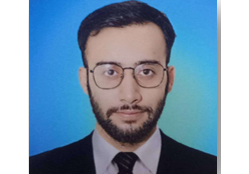
Seminar on "Hybrid Active Disturbance Rejection and Neural Network Control Architecture for Optimized Charging-Discharging Current Regulation in Li-ion Batteries" by Mr. Abdullah Memon, A CIE Graduate Student
-
22-125
-
Sept. 16, 2026 - Sept. 16, 2026
-
2 p.m. - 3 p.m.
Abstract
The growing adoption rate of Electric Vehicles (EVs) and energy storage solutions has fueled the market for efficient and safe Battery Management Systems (BMS) with advanced features for the proper functioning of Li-ion batteries. However, out of several functions associated with BMS design and functionality, charging-discharging management plays a vital role in increasing battery life and system efficiency. To address this issue, this research proposes a comprehensive and efficient charging-discharging management strategy for the Panasonic NCR18650BD Li-ion battery. A precise and dynamic model for a Bidirectional Buck-Boost converter was developed and simulated on MATLAB Simulink version 2024b for accurately interpreting the dynamic charging-discharging process. A variety of Controllers, such as traditional and advanced Controllers including Fuzzy controllers and cascaded controller models, were employed for optimized charging-discharging management and rigorously tested on various parameters such as rise time, settling time, overshoot percentage, steady-state error percentage, and disturbance rejection test. However, the proposed Active Disturbance Rejection and Neural Network (ADRC+NN) controller outperformed all other controllers with respect to settling time (0.016 s), overshoot percentage (<1%), and minimum steady-state error, and proved to be fully robust on step-load Disturbance Test, Periodic Disturbance Test, and Stochastic Disturbance Test conditions compared to other controllers and combinations. The reason for the good result is the complementary effect of Disturbance Rejection and non-linear learning properties within the controller model framework. In summary, this research emphasizes the practical applicability of the hybrid Intelligence approach for precise management and regulation of advanced Li-ion battery solutions for next-generation EV and energy storage products.
About the Speaker
Mr. Abdullah Memon is a PhD student in the Control and Instrumentation Engineering Department at King Fahd University of Petroleum and Minerals (KFUPM), Saudi Arabia. He received his M.S. degree in Systems and Control Engineering from King Fahd University of Petroleum & Minerals, Dhahran, Saudi Arabia, in 2025, and his B.E. degree in Electronics Engineering from Mehran University of Engineering and Technology (MUET), Pakistan, in 2022. His research interests include intelligent and adaptive control, battery management and energy storage systems, machine learning, system identification, optimization, power and energy systems, and autonomous systems. His research has resulted in several peer-reviewed journal articles, international conference papers, and a book chapter.